| |
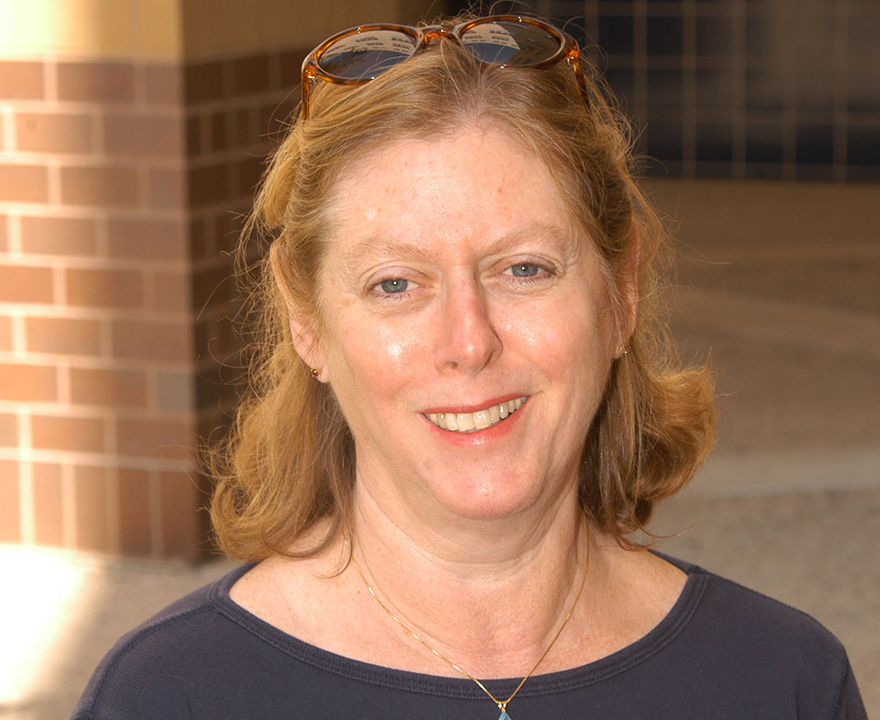
*SOLINGEN PRESIDENT-ELECT OF INTERNATIONAL STUDIES ASSOCIATION
*Etel Solingen, political science professor and UCI Chancellor’s Professor, has been selected to serve as president-elect of the International Studies Association (ISA). Her term as acting president of the 4,000+ member organization will begin in 2012 following one year of service as president-elect which officially begins in March 2011 at the association's annual meeting in Montreal. Solingen is a past vice-president of ISA, and past-president of the organization’s International Political Economy section.
An internationally recognized political science scholar, Solingen is one of the world's foremost experts on nuclear proliferation, international political economy, and regional orders. She has participated in various "Track Two" meetings with academic and government officials designed to address international conflicts and has lectured extensively at research institutes worldwide. In 2008, her book /Nuclear Logics: Contrasting Paths in East Asia and the Middle East/ < http://press.princeton.edu/titles/8554.html> received the American Political Science Association's (APSA) Woodrow Wilson Foundation Award for the best book on government, politics, or international affairs and the Robert Jervis and Paul Schroeder Award for the best book on international history and politics, awarded by the Section on International History and Politics of APSA. Recently, she received a grant from the Carnegie Corporation to apply her theoretical work to improve our understanding of the effectiveness of economic sanctions and positive inducements in preventing nuclear proliferation. Solingen has also served as chair of the steering committee for the University of California's system-wide Institute on Global Conflict and Cooperation and was part of an APSA special task force focused on improving U.S. standing in world affairs. She is a past recipient of the Excellence in Mentorship Award from APSA and a Distinguished Teaching Award from UCI's Academic Senate and currently serves as review essay editor of /International Organization/, the leading journal in the field of international political economy. (Courtesy of the UCI School of Social Sciences E-News)
FAREWELL - FRANK LYNCH
Dear Friends, It is with great sadness that I tell you that Frank Lynch, a long time member of the UCI Ethics Center, died Sunday, November 21, 2010. Frank was a lovely human being and a dear friend, and we all shall miss him. I include the obituary written by Frank’s two daughters, Molly and Kathryn, but want to say just a few words here, in tribute to this lovely man.
I met Frank first when he was a student in one of my undergraduate classes, some 14 or 15 years ago. Frank was not the usual student; he was not only much older – he was much better than most of the other students, and we struck up a friendship as we chatted after class. I learned Frank had done his first degree at Stanford, had fought in World War II, then returned to Stanford and married his college sweetheart, Marilyn. Frank had escorted Bertrand Russell on a campus visit, his wife’s maid of honor was Sandra Day O’Connor, and while a volunteer fireman at Stanford Frank saved the professor who invented the I.Q. test from death in a burning building. (The guy fell asleep when smoking in bed and started the whole fire. I ask you. How smart could that be?” was Frank’s comment.) Frank went on to become President and Chief Operating Officer at Northrop Aviation and seemed to know everyone, from the young Hewitt and Packard to Charlie Wilson. (“From my days in the military-industrial complex,” Frank joked, after the movie, Charlie Wilson’s War came out.) Certainly Frank read everything, taking courses online at Stanford and Oxford, and nearly completing his PhD in Economics at UCI. I think he attended every class I taught for several years, and I missed his drole comments and his insight when he stopped attending because of reasons of health, or perhaps because he just got tired of the professor! We remained good friends, even though he never could convince me that Calvin Coolidge was not the best American president, and I could never convince him that Frank Delano Roosevelt had not ruined the US economy forever. But we loved our political conversations and always found more to agree on than to disagree about. Frank was the very definition of a gentleman and a scholar. He loved learning. He loved ideas. He was devoted to his family and his friends. Frank’s generosity to the Ethics Center – both financial and in terms of advice – were critical in keeping the Center going through the initial days, and his presence at our meetings was always a pleasure. We shall miss him.
I had often tried to get Frank’s permission for us to name something after him, as a way to honor his incredibly ethical life. He always refused, modest to a fault. This summer he recorded several hours of reminisces about his life for the interns at the Ethics Center, as part of a project on how people deal with the moral choices they face in their lives. Frank’s conversation was thoughtful, engaging and fascinated the young people hearing his stories for the first time. With the permission of his two daughters, we will make this interview available on the Ethics Center website. But Frank’s true legacy lives on in the inspiration he provided 18 young people who were both touched and instructed by his life, and in our own gratitude for having been allowed to know this incredible human being. We shall miss you, Frank.
Kristen Monroe, Director, December 2010
Obituary. With thanks to Molly and Kathryn Lynch.
Frank W. Lynch, President and Chief Operating Officer of the Northrop Corporation from 1980-1989 and lifetime promoter of the arts and education, passed away Sunday, November 21, at the age of 88.
A graduate of Stanford University with degrees in Political Science and in Electrical Engineering, Mr. Lynch spent forty-two years in the aerospace industry, an expression of a love of aviation that began in high school when he worked at a local airfield and learned to fly crop dusters. After serving in the Pacific Theater in the Army Air Corps as a technical officer in the 70th Army Airways Communications System Group during World War II, he joined the Boeing Airplane Company in Seattle for two years, from 1948-1950. Returning to California in order to marry his college sweetheart Marilyn Hopwood, he started work for Northrop in 1950. Between 1950 and 1989 he advanced through the ranks of the corporation, beginning as a research assistant in the special weapons division and becoming an expert in guidance systems. In 1961 he became Vice President and General Manager of the Electro-Mechanical Division of the company, based in Anaheim. He later served as Senior Vice-President of Operations and joined the Corporate Board of Directors in 1974. Mr. Lynch finished his tenure at the company as the President and Chief Operating Officer during the decade of the 1980s when Northrop was developing the cutting-edge Stealth Bomber technology, a project that Mr. Lynch sometimes saw as a vindication of the company's experiments in the early 1950s with the B-49 Flying Wing. The 1980s also saw the company fall under intense scrutiny from legislators and public watchdogs, a challenge to which Mr. Lynch brought his reputation for integrity and problem-solving. He retired in 1990 at the age of 68.
Not content to sit still during retirement, Mr. Lynch soon returned to school. He was admitted to the University of California, Irvine, in 1993, from which he graduated with his third bachelor's degree, cum laude in Economics, in 1996. Although health problems prevented him from completing a graduate degree in Economics, Mr. Lynch remained throughout his life an intellectual, an avid traveler, and a voracious reader with a deep interest in social and economic policy as well as in history and technology. He was the consummate early adopter, the first person on his block to use a hand-held calculator, wear an electric wrist watch, own an answering machine, a video recorder, a cell phone, a personal computer, and near the end of his life he was a devoted reader of his Kindle.
His interests, however, were never esoteric. He loved political debate and conversation, which was informed by a lifetime of practical experience that attuned him to the real-life consequences of abstract ideas on real people and led him to be skeptical of grand schemes. But nobody had a kinder heart or was more willing to lend his support to a worthy cause or a person in need. A jazz trumpeter in his youth, who once played gigs on a steamboat on the Mississippi River, he shared a love of music and the arts with his wife, who passed away in 1998. The couple were active supporters of several arts organizations, including Ballet Pacifica, the National Choreographers Initiative, the Corona del Mar Baroque Music Festival, and the South Coast Repertory Theatre. Over the years, he was on the Board of Governors of the Los Angeles Music Center, the Board of Trustees of the Los Angeles Music Center Operating Company, Co-chair of the Joffrey Ballet Board of Trustees, Director of the American Council for the Arts (NYC), a founding Trustee of the Orange County Performing Arts Center, and a Trustee of the Irvine Barclay Theater. He also participated indefatigably in other charitable and public-minded enterprises. An incomplete list includes service on the Board of Trustees for the Newport Beach Library, on the California State University Foundation, and on the UCI Deans Advisory Committees for the Schools of Engineering, the Arts, and the Social Sciences. In his spare time, he volunteered at a program in the schools reading to third-graders.
The beloved father of two daughters, Mr. Lynch was married for 48 years to Marilyn Hopwood Lynch. He grew up around the water and participated in boating activities as a Sea Scout. Later, as a member and one-time Commodore of the Balboa Yacht Club, he redesigned the junior program, took pleasure in racing and cruising on several boats that he owned over the years, and enjoyed vacations with his family sailing to Catalina and other more exotic locales, most recently in a sailing trip to New England during the summer of 2009. He is survived by his brother Robert Lynch, of Smith River, California; his daughters Kathryn and Molly, professors respectively at Wellesley College and UCI; and three grandchildren.
No memorial service is planned at this time. In lieu of flowers, contributions can be made to the Balboa Yacht Club Maritime Sciences and Seamanship Foundation (http://bycmssf.org/), the National Choreographers Initiative (http://www.nchoreographers.org/chordanc.htm), or the University of California, Irvine, School of Social Sciences (http://development.ss.uci.edu/).
Monday, October 11, 2010
2 Events to note:
Anti-Semitism and Zionism in the Debate on the Palestinian Issue
The UCI Interdisciplinary Center for the Scientific Study of Ethics & Morality presents
"Anti-Semitism and Zionism in the Debate on the Palestinian Issue"
with Herbert Kelman, Richard Clarke Cabot Professor of Social Ethics Emeritus, Harvard University
Thursday, October 21, 2010
7:30-9:00 p.m.
Social & Behavioral Sciences Gateway, Room 1517
Light refreshments will be provided. Please RSVP to cssem@uci.edu or 949-824-2566.
Co-sponsors: School of Social Sciences, Office of the Vice Chancellor Student Affairs, Department of Political Science, Department of Psychology and Social Behavior, Center for Global Peace and Conflict Studies, Center for Citizen Peacebuilding, Political Psychology Program, and International Studies Program
For more information about the Ethics Center and its events, visit http://www.ethicscenter.uci.edu/.
For complete information, click on:
http://www.socsci.uci.edu/node/1794
Interactive Problem Solving: Changing Political Culture in the Pursuit of Conflict
The UCI Interdisciplinary Center for the Scientific Study of Ethics & Morality, Department of Political Science Colloquium Series and Center for Research in International and Global Studies RIGS Research Seminar Series present
"Interactive Problem Solving: Changing Political Culture in the Pursuit of Conflict Resolution"
with Herbert Kelman, Richard Clarke Cabot Professor of Social Ethics Emeritus, Harvard University
Friday, October 22, 2010
2:00-3:30 p.m.
Social Science Plaza A, Room 2112
Light refreshments will be provided. Please RSVP to cssem@uci.edu or 949-824-2566.
Co-sponsors: School of Social Sciences, Office of the Vice Chancellor Student Affairs, Department of Psychology and Social Behavior, Center for Global Peace and Conflict Studies, Center for Citizen Peacebuilding and Political Psychology Program
For complete information, click on:
http://www.socsci.uci.edu/node/1795
Tuesday, July 20, 2010
The link to altruism and kindness survey is now available below. Please take the time to complete this survey.
http://www.surveymonkey.com/s/R6L5JZY
Thursday, June 03, 2010
Monroe receives Ithiel de Sola Pool Award from American Political Science Association.
The Prize is awarded once every three years and includes presentation of a general lecture at APSA’s 2010 annual meeting. Kristen Renwick Monroe, political science and philosophy professor and founder and director of UCI’s Interdisciplinary Center for the Scientific Study of Ethics and Morality, has been selected to receive the American Political Science Association’s 2010 Ithiel de Sola Pool Award. Established in 1995 to honor noted MIT political scientist Ithiel de Sola Pool, the prize is awarded every three years to a scholar whose work explores issues of political theory, behavior, communication, science and technology, policy, and international affairs. As the 2010 award winner, Monroe will deliver a general lecture at APSA’s annual meeting in Washington, D.C. September 2-5.
Monroe’s research focuses on political psychology, political economy, and normative political theory. Her award-winning work on altruism and moral choice deals with a central problem in politics and ethics: the treatment of others. She has written 12 single-authored books or edited volumes and more than 50 articles. Her awards include the 2010 Paul Silverman Award for Outstanding Scientific Work on Ethics, a Pulitzer nomination, a National Book Award nomination, and two American Political Science Association Best Book Awards for both The Heart of Altruism (1996) and The Hand of Compassion (2004). She has served as president of the International Society of Political Psychology and vice-president of the American Political Science Association. Her most recently completed works are a book on ethics in an age of terror and genocide and an edited volume on the relation of science to ethics, Uneasy Bedfellows? The Scientific Analysis of Ethics, which includes chapters by Francisco Ayala, Kenneth Arrow, Tom Schelling, Cheryl Koopman, Jennifer Hochschild, Joe DiMento and Gil Geiss. She is currently working on several books which feature topics including Jewish émigrés from the Third Reich; an extended conversation with economist and Nobel laureate Kenneth Arrow about ethics and economics; gender equity in academia; an introduction to political science; and Chloe and Nicole, and the Elephant in the Parlor, a popular introduction to ethics.
Thursday, May 13th, 2010
Francisco J. Ayala Wins 2010 Templeton Prize

WASHINGTON, D.C., MARCH 25 – Francisco J. Ayala, an evolutionary
geneticist and molecular biologist who has vigorously opposed the
entanglement of science and religion while also calling for mutual
respect between the two, has won the 2010 Templeton Prize.
Ayala, 76, a naturalized American who moved from Spain to New York in
1961 for graduate study and soon became a leader in molecular evolution
and genetics, has devoted more than 30 years to asserting that both
science and faith are damaged when either invades the proper domain of
the other.
Ayala, the Donald Bren Professor of Biological Sciences at the
University of California, Irvine, whose groundbreaking research into
parasitic protozoa may lead to cures for malaria and other diseases, has
equated efforts to block religious intrusions into science with “the
survival of rationality in this country.” To that end, in 1981 he served
as an expert witness in a pivotal U.S. federal court challenge that led
to the overturning of an Arkansas law mandating the teaching of
creationism alongside evolution. In 2001, George W. Bush awarded him the
National Medal of Science.
Even as he has warned against religion’s intrusion into science, Ayala,
a former Dominican priest, also champions faith as a unique and
important window to understanding matters of purpose, values and the
meaning of life.
This respect for the rightful, if separate, roles of science and faith
has allowed Ayala to consider questions such as “Does scientific
knowledge contradict religious belief?” and “Is morality derived from
biological evolution?” that draw upon each discipline and may bring new
insights that advance human endeavor.
The Templeton Prize was announced today at a news conference at the
National Academy of Sciences in Washington, D.C., by the John Templeton
Foundation, which has awarded it since 1973. Valued at one million
pounds sterling (about $1.53 million or €1.12 million), the Prize is the
world's largest annual award given to an individual and honors a living
person who has made exceptional contributions to affirming life’s
spiritual dimension. HRH Prince Philip, the Duke of Edinburgh, will
award the Prize at a private ceremony at Buckingham Palace on May 5.
In a statement prepared for the news conference, Ayala forcefully denied
that science contradicts religion. “If they are properly understood,” he
said, “they cannot be in contradiction because science and religion
concern different matters, and each is essential to human
understanding.” Referring to Picasso’s /Guernica/, he noted that while
science can assess the painting’s massive dimensions and pigments, only
a spiritual view imparts the horror of the subject matter. Together, he
explained, these two separate analyses reveal the totality of the
masterpiece.
John M. Templeton, Jr., M.D., president and chairman of the John
Templeton Foundation, praised Ayala’s research, scholarship, development
of new schools of thought, and innovative assessments of some of the
most fundamental questions of life. He recognized that his remarkable
breadth and depth of analysis, focusing on genuine discovery, exemplify
the design and purpose of the Prize program founded by his late father,
Sir John Templeton. “Ayala’s clear voice in matters of science and faith
echoes the Foundation’s belief that evolution of the mind and truly
open-minded inquiry can lead to real spiritual progress in the world,”
said Dr. Templeton.
In nominating Ayala for the Prize, Dr. Ralph J. Cicerone, president of
the National Academy of Sciences, recounted the broad influence of
Ayala’s scientific teaching and writings, including more than 1,000
papers and 40 books, adding, “His publications show the power of science
as a way of knowing and the significance and purpose of the world and
human life, as well as matters concerning moral or religious values that
transcend science.”
Ayala’s news conference reference to Picasso’s /Guernica/ was more than
simple metaphor. Born in Madrid in 1934, shortly before the Spanish
Civil War unleashed its terror, he grew up within the smothering
restrictions of the Franco era. Though his family was largely involved
with business and finance, Ayala showed an early interest in science
that was cultivated by the priests who taught him. In 1960 he, too,
became a priest, but soon decided to leave the priesthood – and the
intellectual repression of Franco’s Spain – to attend Columbia
University in New York, despite virtually no working knowledge of English.
There he met Theodosius Dobzhansky, considered among the 20th century’s
most distinguished geneticists and evolutionary biologists, who saw
Ayala as a student with potential to lead the field’s next generation.
Ayala did not disappoint. Under Dobzhansky’s tutelage, he received his
Ph.D. from Columbia in 1964 with a thesis that established that rates of
evolution depend on the genetic variation of a species.
It was the first of many discoveries that placed Ayala among the
pioneers of genetic research in the second half of the 20th century,
including his proof that the parasites responsible for Chagas, an often
fatal disease afflicting millions of people living in the tropics,
reproduced not sexually but by cloning. This led to similar discoveries
about the parasites that cause malaria and other tropical diseases,
opening up new approaches to potential vaccines.
Ayala also developed highly-accurate ways to read genetic clocks to
determine the timing of precise steps in the evolution of a species over
millions or even billions of years. Recently, he and colleagues
determined that malaria was likely first transmitted from chimpanzees to
humans a mere five or six thousand years ago, possibly through a single
mosquito. In January 2010 he co-authored a paper establishing that
gorillas and chimps may now serve as reservoirs for the parasites that
cause human malaria, so that even if a vaccine is developed, humans will
always be vulnerable to re-infection.
Besides holding professorships in biology, philosophy, logic, and
philosophy of biology (a field he helped establish), at the University
of California, Irvine, Ayala is also University Professor, the highest
rank within the California university system and the only person with
that title at Irvine.
Three years after the Arkansas court challenge, Ayala was asked by the
National Academy of Sciences to serve as principal author of Science,
Evolution, and Creationism, a categorical refutation of creationism and
so-called intelligent design. Follow-up editions were published in 1999
and 2008.
In 2007, Ayala wrote /Darwin’s Gift to Science and Religion/ (Joseph
Henry Press), a broad review of the proper context of science and
religion in modern society. His new book, /Am I a Monkey? Six Big
Questions about Evolution/, will be published by Johns Hopkins
University Press in October.
In 1994, President Bill Clinton appointed Ayala to the U.S. President’s
Committee of Advisors on Science and Technology. While president of the
American Association for the Advancement of Science (AAAS) from 1993 to
1996, he developed the AAAS “Dialogue on Science, Ethics, and Religion.”
He is a member of the National Academy of Sciences and a foreign member
of the scientific academies of, among others, Spain, Russia, Italy,
Mexico and Serbia.
Ayala has two children, Francisco José and Carlos Alberto, from a first
marriage which ended in divorce. He married Dr. Hana Lostakova, an
ecologist, in 1985.
After moving to California in the 1970s, Ayala purchased a weekend
property with a vineyard. Following several expansions, he now supplies
major wineries with grapes from more than 2,400 acres of fields in San
Joaquin and Sacramento counties.
NOTES:
- The Templeton Prize each year honors a living person who has made
an exceptional contribution to affirming life’s spiritual
dimension, whether through insight, discovery, or practical works.
- Created by the late global investor and philanthropist Sir John
Templeton, the Prize is a cornerstone of the John Templeton
Foundation’s international efforts to serve as a philanthropic
catalyst for discovery in areas engaging life's biggest questions,
ranging from explorations into the laws of nature and the universe
to questions on love, gratitude, forgiveness, and creativity.
- The monetary value of the prize is set always to exceed the Nobel
Prizes to underscore Templeton's belief that benefits from
discoveries that illuminate spiritual questions can be
quantifiably more vast than those from other worthy human endeavors.
Thursday, April 22nd, 2010
ETHICS CENTER FACULTY HONORED FOR TEACHING
The UC Irvine Athletic Department honored Linda J. Levine, Professor in the Department of Psychology and Social Behavior, a member of the Ethics Center and member of the UC Irvine faculty since 1991, for her outstanding achievement in teaching throughout her career. The Athletic Department acknowledged Professor Levine as a part of the on-going Faculty Recognition Program which highlights the contributions of key members of the University community. A special presentation took place on Saturday, April 17th in conjunction with the Men's Volleyball match.
Open letter on Tolerance and Free Speech within a University Setting
From the Director and Executive Board of the UCI Interdisciplinary
Center for the Scientific Study of Ethics and Morality
Date Posted: March 6. 2010
On February 8, 2010, Michael Oren, Ambassador from Israel to the United
States, spoke at UCI to more than 600 attendees. To the best of our
information, based on conversations with attendees plus viewing a video
on YouTube, this talk was repeatedly disrupted by members of the UCI
Muslim Student Union who refused to let Ambassador Oren speak.
Despite being assured that they would have ample opportunity to express
their opinions during the question period, the students continued to
shout and applaud the interruptions, preventing Ambassador Oren from
speaking. One by one, the disruptive students were ushered out of the
room by UCI Police, in accordance with University policies regarding the
disruption of campus events.
It is worth noting two points: (1) The students were evicted NOT because
of the content of their speech, but because they were making it
impossible for an invited guest of the university to speak. (2) Although
Ambassador Oren left the podium for 20 minutes, he returned, and was
heckled repeatedly again. Eventually the remaining students associated
with the disruption left the room, permitting Ambassador Oren to complete
his address without further interruption.
As individual UCI faculty members concerned with ethics, however, and
without presuming to represent any particular group or the university
itself, we wish to make four points.
(1) We strongly support free speech for all groups, including those
expressing opinions with which we disagree or find abhorrent. Free speech
is essential to both a democracy and the intellectual life of a
university.
(2) Exercising one’s right to free speech should not interfere with the
rights of others to exercise their free speech. That is, we take one’s
right to free speech to include a right not to be deliberately prevented
from speaking. As best we can ascertain from the evidence available to
us, the disruption of Ambassador Oren’s speech constituted an attempt to
prevent Ambassador Oren from speaking.
(3) One can disapprove of the policies of a particular government – be
that government Israel, an Islamic state or the United States – and yet
still respect the rights of citizens of that state to speak openly in
discussing public policies. We regret that students at UCI did not
respect Ambassador Oren’s rights.
(4) Finally, we must underline our belief that regardless of who the disrupters are, they should nonetheless be treated both respectfully and with the same rules that apply to everyone else on campus. Rules and procedures for such situations should be clearly stated in official handbooks and accessible to everyone; disciplinary procedures should be followed with appropriate respect for the situation and the rights of all concerned. These rules and procedure must apply to everyone evenly. If members of a Muslim student group disrupt a meeting to prevent a representative of Israel from speaking they should be subject to the same disciplinary procedures as would apply to members of a Jewish student group who disrupt a meeting to prevent the representative of an Islamic government from speaking.
We hope and trust that the UCI administration will follow such a
policy.
ANNOUNCEMENT
Roxane Cohen Silver travels to Chile to help with trauma victims from earthquake.
On February 27, an 8.8 magnitude earthquake struck Chile, killing hundreds, destroying an estimated $8 billion worth of homes, schools, and hospitals, and causing over $1 billion in infrastructural damage. Roxane Cohen Silver, professor of psychology & social behavior and member of the Ethics Center, will travel to Chile this week to assist in post-earthquake recovery and oversee the design of psychological intervention efforts. Universidad Andres Bello, on behalf of the Chilean government, invited Silver, an expert on trauma and coping, to Chile. She will meet with the Minister of Health as well as other government, health, education and emergency response officials in the devastated regions of the country. According to Silver, psychologists in Chile were familiar with her 2005 US congressional testimony on the role that social and behavioral sciences can play in disaster preparedness and response. During her visit, she also will meet with officials from the US Embassy in Santiago and deliver public and professional lectures on Coping with Traumatic Life Events. Photos of Silver's trip will be posted on our webstie on her return.
Ethics Center Member Francisco Ayala Wins Templeton Prize
From the EVC's Announcement:, to which we add our own congratulations "It is a tremendous honor to congratulate our own Francisco Ayala, University Profesor and Bren Professor of Ecology and Evolutionary Biology, on his receipt March 25 of the 2010 Templeton Prize. A highly regarded award rivaling the Nobel Prize in prestige and scope, the Templeton Prize each year honors a living person who has made an exceptional contribution to affirming life's spiritual dimension, whether through insight, discovery, or practical works.
Monday, February 1st, 2010
The handout to the Easton Lecture Series are now available. Once the video is available, we will post it online as well.
Please click on the following for the word document version.
Easton Lecture
Monday, November 23rd, 2009
We would like to acknowledge that the podcasting of the Health Care Forum was made possible by the very generous support of Bettye Vaughen. Thank you, Bettye for your past and continuing support to the Interdisciplinary Center for the Scienctific Study of Ethics and Morality.
Please follow the following link for the podcast.
http://cast.nacs.uci.edu/socsci2/centers/ethics_center/healthcare_forum_10_09.mp3
Wednesday, October 7th, 2009
CEM is hosting a Health Care Forum on October 27th, 2009. For additional information, please read the following attatchment.
 
|
|